






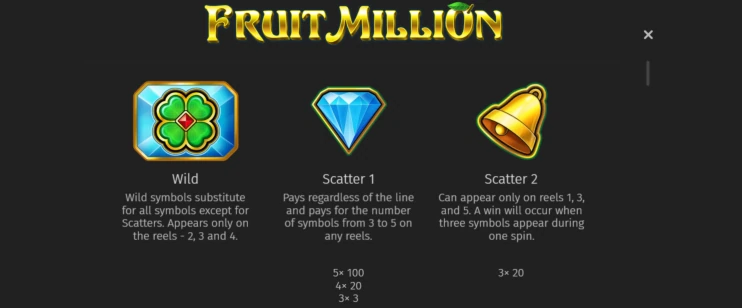
Fruit Million

Fruit Million In Norway: How To Play

Get quick, practical steps for bets, payout percentage, breaks, and withdrawals when playing Fruit Million in Norway (18+).

Fruit Million demo
review image 1
Fruit Million

Fruit Million RTP And What It Means

The payout percentage is a number many use to compare slot machines, but it quickly becomes misleading if you read it as a promise for tonight's session. Think of it as a long-term expectation level, not a guarantee. It describes what can happen over a great many rounds, while your session can fluctuate wildly both up and down.

Imagine you sit down after work and want to play for 20 minutes. You get a couple of small hits early on, and everything feels 'kind'. It can be tempting to believe you've found a safe rhythm, but the next fifteen minutes could be completely different - therefore, you should manage your session with a budget, time, and breaks, not with hope.

In 2026, we see more players actively using tools such as time alerts and deposit limits because the pace is higher than before (especially on mobile). This is a smart shift. When you combine an understanding of payout percentage with practical habits, you get a calmer experience - and you avoid 'explaining' every loss or win with emotions.

Fruit Million

Top casinos for playing Fruit Million — current list

ALF Casino

ALF Casino

Mafia Casino

Mafia Casino

SG Casino

SG Casino

Retro Bet

Retro Bet

leovegas

LeoVegas

Fruit Million

How To Play Fruit Million

Getting started is easy, but playing with control requires some conscious choices. First, you choose your bet, then you start rounds, and along the way, you keep an eye on symbols, payouts, and any features. That's all. Nevertheless, it is precisely the simplicity that makes many people play too fast.

Imagine opening the game on your phone while waiting for something. Players usually do the same: they hit spin immediately, speed up the tempo, and don't notice that the session lasts longer than planned. A better start is to spend 30-60 seconds checking game info (rules, winnings, features), and then playing a short block at a low level to get a feel for the rhythm.

If you play from Norway, stick to 18+ and use the responsible tools available. You don't need to “win big” for a session to be successful. A successful session is one you end when you decided to end it - without negotiating with yourself.

Fruit Million

Stakes and Session Plan for Calm Play

A good session doesn't start with the spin button, but with a plan that's simple enough to follow. Decide how long you'll play, what budget you'll use, and what stake you'll stick to in that block. When you do this before you get excited or annoyed, your choices will be better.

Imagine you've set aside a small sum for entertainment tonight. Without a plan, you might burn through it quickly, then top up “just a little”. With a plan, you divide the amount into two or three blocks, take a break between each block, and check if you're still playing calmly.

Choose Your Bet and Play in Blocks

The most important betting trick is actually boring: choose a level you can maintain stably. Stable stakes give you a session you can understand, while constant changes make everything unclear - and often more expensive than you think. If you want to test a higher level, do it as a separate, short block with its own time limit.

Imagine you lose several rounds in a row and feel like “solving” it by increasing your bet. Many people do it automatically. Instead, do this: end the block, take a one-minute break, and start a new block at the same level or lower. That's how you stop an impulse before it becomes a habit.

Understand Fluctuations Without Chasing

Slot machines can have periods that feel quiet and periods that feel intense. That doesn't mean something “has” to happen soon. When you try to chase a specific event, you often end up playing longer than planned and taking greater risks than you intended.

Imagine saying to yourself: “I'll stop after I get a good round.” Then you're constantly moving the finish line, and the session becomes practically endless. A better rule is: “I'll stop when the time is up.” That rule is strict enough to work - and simple enough to remember.

Autospin can be practical, but it removes the small thinking point between rounds. If you use autospin, set clear stops: a low number of rounds, a time alert, and a rule that you don't use it when you're distracted. That makes the difference between a controlled session and one that just rolls on.

Imagine you're watching something else at the same time and letting the rounds play in the background. You're not paying attention, and suddenly you feel annoyed. Turn off autospin, go back to manual rounds, and make the session shorter. That's often enough to regain control.

Timeout is not a defeat, it's a stop button. Use it at the early signs: you're clicking faster, you're getting short-tempered, or you're thinking more about “catching up” than enjoying yourself. That's exactly when a break works best.

Imagine you notice yourself holding your breath and becoming tense with each spin. That's a clear sign that the session has changed character. Take a break, do something else for a few minutes, and make a new decision without the screen in front of you.

review image 2
Fruit Million

Deposits and Withdrawals in Norway

Cash flow often determines whether the session feels tidy or messy. Deposits should be planned, not emotionally driven. Withdrawals should be be a closing routine, not something you “might do later” when you're tired. When you build routines around this, your playing becomes more stable.

Imagine you're a little bit in profit and feeling confident. Many then push the tempo and give a lot back at the end. If you instead stop, do a quick status check, and follow your routine, you'll have a better evening no matter the outcome.

Make Deposits With a Plan

A good rule is to decide the amount before you open the game. When you deposit money impulsively, you increase the risk that the session becomes a chase. Plan one funding per session, and end when it's used up. It's simple, but extremely effective.

Imagine you've used up your budget faster than you thought, and the temptation to top up comes immediately. Don't make the choice inside the game. Exit the session, stand up, and ask yourself if you're still playing for entertainment. If the answer is no, end for the evening.

Withdrawals as a Closing Routine

Withdrawals work best when you see them as a period. Decide in advance what it takes for you to end: a time limit, a budget cap, or a small “security” if you're in profit. When you follow that rule, you avoid the classic trap of “just a few more rounds”.

Imagine you've just had a good round and want to continue because it feels promising. Stop for one minute. Consider whether you want to secure a portion, and if you continue playing, do so in a new, short block with a slower pace. This ensures you don't give everything back in a long final spurt.

Theme

What You Set Up

Why It Helps

Session Length

Time or Round Limit

You get a clear stopping point when the pace draws you in

Bet Level

Fixed level per block

You avoid impulsive increases and get more predictable duration

Deposit Rule

One deposit per session

Reduces the 'top-up' pattern when mood fluctuates

Withdrawal Routine

Decide what you secure, when you stop

Makes the ending calm and less emotionally driven

Pause Tools

Timeout, time alerts, self-exclusion

Breaks autopilot and helps you stay in control (18+)

Stress-Free Verification

Verification and confirmations are easiest when you do them before you care about payouts. It's not about assuming anything about winnings, but about avoiding friction that can trigger irritation and 'waiting play'. Do account work when you are calm, so your session can be a session.

Imagine you want to quit and need to take an extra step. Many become impatient and keep playing while they sort it out. Better: stop completely, complete the step, and log off. When you do it consistently, the experience becomes much more controlled.

Fruit Million

Practical Gaming Tips Without Myths

There are many 'tips' that are actually just myths. They promise control over something you cannot control. What you can actually improve is the process: how you start, how you maintain pace, and how you finish. It's less glamorous, but it works.

Imagine you've read advice that you should increase your bet after a loss or switch games when it's quiet. In practice, this often just makes the session more expensive. A better tip is to stick to a plan and use breaks when emotions start to take over.

Game Info In 60 Seconds

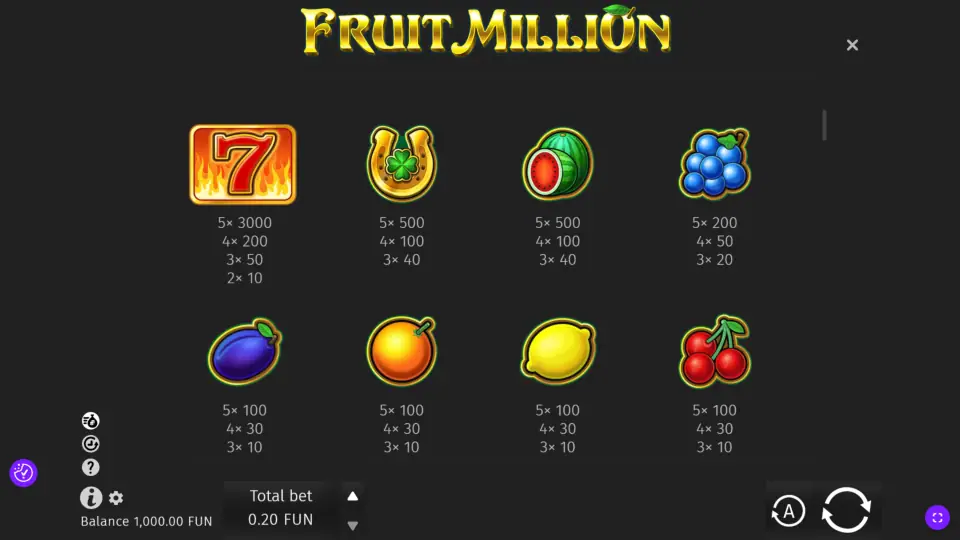
You don't need to study everything, only the parts that affect your expectations. Look for how wins count, what triggers features, and if anything changes with your bet. When you know that, you'll be less irritated by 'almost' moments.

Imagine you see many similar symbols and expect more than you get. If the rules require a specific placement or pattern, that's completely normal. Check the game info quickly, so you don't have to 'test' with higher bets in frustration.

Features And Bonus Moments

Features feel big, and therefore they can also control your behavior. The most common mistake is to decide you'll stop 'after something exciting happens'. Then you keep moving the stopping point again and again. Instead, make features a bonus within the session, not a goal.

Imagine you are 5 minutes over your time limit, but stay because you feel you are 'close'. Stop anyway. If you want to play more, start a new session later with a new budget and a new time limit. That's how you maintain control in the long run.

Budget Habits That Last

A habit beats motivation. Divide your budget into blocks, and take a break between them. Keep your bet stable in each block. And finish when the block is done, even if you feel both optimistic and irritated. This is the basic recipe for a safer session.

Imagine you notice you're becoming more intense over time. Don't wait until you're completely frustrated. End the block early, take a break, and ask yourself if you're still playing for entertainment. That question can save you from many bad decisions.

Mobile Gaming And Focus

Mobile makes everything faster. It's convenient, but also more impulsive. If you play on mobile, make sessions shorter, use time alerts, and avoid playing when you are tired or distracted. That way, there's less 'autopilot'.

Imagine you're playing in bed and are supposed to be sleeping. You click mechanically, and suddenly you're irritated without really knowing why. Set a short timer before you start, keep your bet low, and stop when the timer rings. Don't negotiate with yourself when you're tired.
review image 3

Responsible Gaming In 2026

Responsible gaming in 2026 is more about habits than morality. You set limits, use breaks, and make your cash flow predictable. You play for entertainment, not to fix your mood or finances. And you stick to 18+ and the frameworks that apply to gaming in Norway.

Imagine you've had a hectic week and want to 'unwind'. Gaming can feel like a quick escape, but it can also become a stress amplifier if you lose control. When you use tools like timeouts and deposit limits, you make the experience safer and easier to end.

How To Catch Your Own Warning Signs

Warning signs appear early, but they are easy to ignore. The most common are haste, irritation, and the thought of 'recovering' losses. When you notice them, it's not time for more rounds - it's time for a break. A short timeout can make all the difference.

Imagine you start clicking without looking at the results. That's autopilot. Stop, get up, and do something else for a few minutes. If you come back, start a new, short block with a slower pace. If you can't stop, use a longer break or self-exclusion. That is the responsible choice.

FAQ

What should I check before starting a session?

Check that you have set a time limit, determined a budget, and chosen a stable bet level for the first block. Imagine you get eager after a few rounds - then it's these frameworks that should govern, not the feeling. Also remember 18+ and use the pause tools early, not as a last resort.

How do I avoid playing too long on mobile?

Make mobile sessions shorter than you think you need, and set a timer before you start. Imagine you're playing while distracted - then the risk of autopilot increases. Keep your bet low, play manually, and stop when the timer rings without 'just one more'.

When is it smart to take a break?

When you notice irritation, haste, or the thought of winning back losses, a break is the right choice. Imagine you're clicking faster and paying less attention - that's a clear signal. A short timeout breaks the pattern before you make expensive decisions.

What is a good rule for deposits?

A simple and effective rule is one deposit per session, and never a new deposit without stopping the session first. Imagine you get a strong urge to top up – exit the game and make the choice calmly. If you still want to play, plan a new session later instead of extending the one you are currently in.

How can I end a good session without giving everything back?

Create a closing routine: stop at the time limit, consider if you want to secure a portion, and only continue in a new, short block if you really want to. Imagine you're feeling extra confident – that's often when the pace picks up and rules slip. A calm finish provides a better overall experience than a long final sprint.

What do I do if I get frustrated by long periods without hits?

Shift focus from “something has to happen now” to “I'm following my plan.” Imagine you're sitting and waiting for the game to change – then you're starting to chase. Slow down, end the block early, and take a break. If frustration recurs frequently, make sessions shorter or take a longer break.

What signs mean I should take a longer break?

If you often play longer than planned, top up multiple times, or feel worse after the session than before, it's a clear sign. Imagine you've promised yourself “tomorrow will be different” several times without it happening – then you need a clear stop. Use self-exclusion or a longer break, and seek help if you feel control slipping.

Play Now
🇬🇧 English